Here’s the thing most people don’t realize about Switzerland:
The train isn’t just how you get around. It’s one of the best parts of being there.
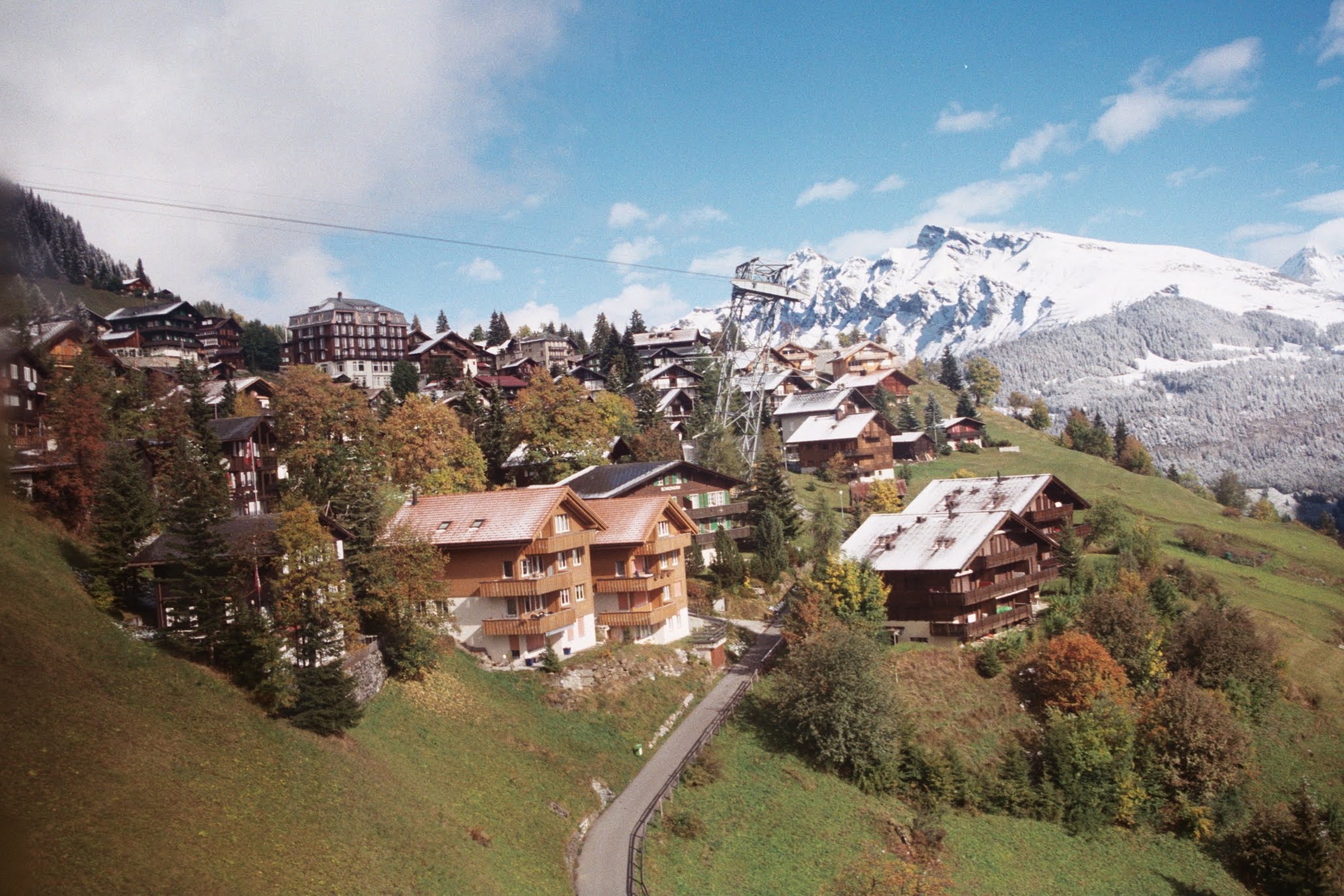
When people picture Switzerland, they imagine mountain views, storybook villages, lakes so clear they don’t look real, and cities that feel both historic and easy to navigate. What they don’t always think through is how they’ll move between all of it.
That’s usually where stress sneaks in.
But in Switzerland, the train makes that disappear.
A Slower, Calmer Way to Move
Traveling by train in Switzerland means you’re not gripping the steering wheel, watching the weather, or double-checking directions. You’re not worrying about parking, road closures, or whether everyone is comfortable in the back seat.
Instead, you’re sitting together.
You might read a book. Play a card game. Share a snack. Or just stare out the window while the scenery quietly steals the show.
Swiss trains are designed for real people, not just point A to point B. You can get up, walk around, grab food or a drink, or move to a quieter seat if someone needs a break. No one feels trapped. That matters — especially when you’re traveling with kids, parents, or grandparents.
The journey becomes shared time, not something to “get through.”
Why the System Just… Works
One of the reasons rail travel works so well in Switzerland is because it was clearly designed with travelers in mind.
The Swiss Travel System is straightforward and family-friendly. Kids under 15 travel free with a parent, which simplifies things immediately. Fewer tickets. Fewer decisions. Less mental juggling.
And when you arrive, you’re not dropped outside the city with one more confusing transfer to figure out. Trains pull right into the heart of towns and villages — often just steps from hotels, cafés, museums, and walking paths.
You arrive ready to explore, not ready for a break.
Reliable in a Way That Builds Confidence
Just like their infamous clocks, Swiss trains are famously reliable. And that makes a difference.
Trains run on time. Connections make sense. Stations are clearly marked and easy to navigate. Even first-time visitors tend to feel confident quickly.
That matters when you’re traveling with multiple people, different energy levels, or varying mobility needs. You’re not constantly wondering if you’ll miss a connection or end up somewhere unexpected.
Because trains, buses, and boats are all connected into one system, you can reach even small alpine villages without feeling rushed or stranded. Each leg of the journey is made on purpose.
The Gift of Arriving the Same Day
One of my favorite things about traveling in Switzerland by train is how quickly the trip settles you into the experience.
You can land, grab your bags, step onto a train, and be at your destination by the afternoon.
No overnight drives. No extra hotel nights just to break up the journey. No starting your trip already exhausted.
You watch the country unfold outside the window, and by the time you get to your destination, you feel like you're acclimated, ready to go, and not overwhelmed and hurried.
That ease sets the tone for everything that follows.
Why This Matters for Families
When travel feels complicated, the stress usually lands on one person — the one doing all the planning. Rail travel spreads that load out. It creates room for conversation, connection, and moments that aren’t scheduled.
In Switzerland, the train isn’t a pause between experiences. It is part of the experience.
For trips that include kids, parents, and grandparents, that makes a real difference. Everyone can participate in the journey in their own way. No one is just enduring the logistics.
Planning Makes the Difference
Swiss rail travel works because it’s intentional. Planning it well needs to be the same.
It’s not about booking a ticket and hoping for the best. It’s about knowing which rail passes make sense, how routes connect cities and mountain regions, and how to build a pace that leaves room to enjoy the journey — not rush through it.
When it's done on purpose, the train doesn't just move you through Switzerland. It creates the experience.
This is the kind of travel I help people plan — trips that feel steady, connected, and grounded from the moment they arrive. Not overstuffed. Not rushed. And never reduced to logistics alone.
Because in Switzerland, the memories don’t only happen at the destination.
They’re made along the way.
You may see affiliate links in this post. If you choose to use them, I may earn a small commission at no extra cost to you. I only recommend partners and resources I trust and would use for my own family’s travels.
Comments
Post a Comment